

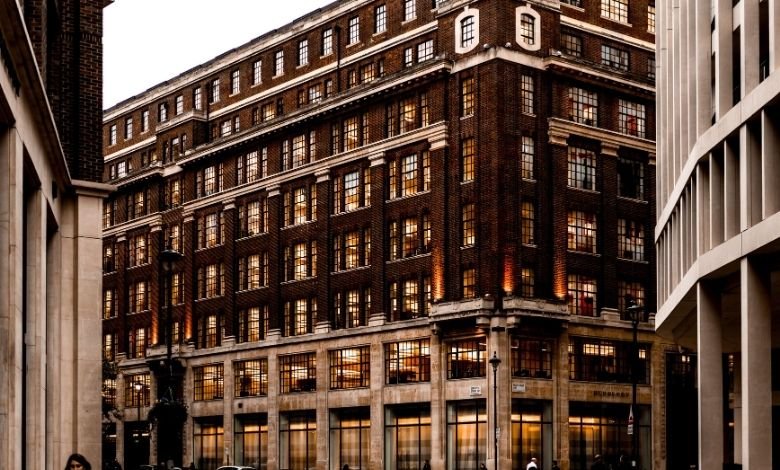
Halliwells LLP collapsed in 2010 after rapid growth, heavy debt, and financial pressures. Explore its dramatic rise, fall, and legacy.
I still remember. The first time I stumbled. The name” Halliwells LLP.” I was on my knees inside. A due- diligence project, Cross referenced an old contract. Since the mid- 2000s, when I saw the listed company legal counsel But a deal.
I wrote the name on Google expecting a tidy” Approximately us” page and a phone number. Instead, I fell into a rabbit hole of court judgments, Bankruptcy notices, and an authentic wild Business story about how one of the UK’s largest regional law businesses broke up quickly after a few years.
If you landed here after that. A similar search, You might request the same question I was: What really happened. Halliwells LLP, And where did it all activity?, and all He lawyers, go Let’s secure into it.
What Was Halliwells LLP?
Halliwells LLP is a major UK commercial law firm, I headquarters Manchester, Which was adapted in the administration. July 2010 And was later forcibly injured.
Key facts at a glance:
- Founded: 2004, taking over the practice of Halliwell Landau (a firm with roots stretching back 30+ years)
- Headquarters: Manchester, United Kingdom
- Offices: Manchester, London, Liverpool, and Sheffield
- Size at collapse (2010): 848 employees, including 372 lawyers and 116 partners
- Entered administration: 20 July 2010
- Compulsorily wound up: January 2012
If you only came here for the headline, that’s it. But stick around, because the details are where the real lessons live , and where the story gets genuinely interesting.
From Halliwell Landau to a Top 50 Powerhouse
Halliwells LLP wasn’t a scrappy startup that got lucky. It was built on decades of established legal practice. When it converted into a limited liability partnership in 2004, it inherited the reputation, client base, and institutional knowledge of Halliwell Landau. Picture a well-established family restaurant rebranding and expanding into a chain , the foundation was solid, and for a while, the expansion looked like genius.
The firm handled a broad spread of legal services, including:
- Corporate law and corporate taxation
- Commercial litigation and insurance litigation
- Banking and commercial property
- Employment law
- Intellectual property
- Pensions, tax, and private client work
This kind of range is typical for a firm chasing “full-service” status, and Halliwells chased it hard. By the mid-2000s, the firm had planted flags in four major commercial centers , Manchester, London, Liverpool, and Sheffield , and billed itself as a serious national player.
I’ve worked alongside a few mid-sized firms over the years, and rapid growth tends to breed a particular kind of confidence. Everyone starts acting like the good times are permanent. Spoiler: they rarely are.
The Spinningfields Move That Changed Everything
This part of the story surprised me, and most surface-level articles skip it entirely. Halliwells made a decision that, in hindsight, marked the beginning of the end: it moved its Manchester headquarters into Spinningfields, an upscale development often nicknamed Manchester’s answer to Canary Wharf.
To sweeten that deal, the firm received a reverse premium , essentially a payment from the landlord to secure the tenancy , reportedly exceeding £20 million. Here’s where it gets messy:
- About 75% of that premium went straight to equity partners
- Many of those partners had already left the firm by the time it collapsed
- The firm was left leaning on debt to stay afloat
- Royal Bank of Scotland (RBS) took security over its assets as a result
Think of it like winning a big bonus at work and blowing the whole thing on one night out instead of saving for a rainy day. Except this “rainy day” turned out to be a global recession, and the bonus wasn’t really profit , it was borrowed prosperity dressed up as success.
Numbers tell this story better than any narrative summary could. Here’s the financial picture, plain and simple:
| Metric | Figure |
| Peak net profit (2006/07) | £8.5 million |
| Net loss (2008/09) | £1.8 million |
| Debt owed to RBS (secured) | £17.7 million |
| Debt owed to unsecured creditors (initial 2010 report) | £14.1 million |
| Estimated final unsecured creditor deficiency | £191–203 million |
| Owed to barristers/professional experts | £2.1 million |
| Owed to HM Revenue & Customs | £4.3 million |
| Work in progress at collapse | £16.3 million |
| Debtors at collapse | £12.1 million |
| Cost of administration process | £1.1 million |
A few of these numbers deserve context , and one of them tells a much bigger story than it first appears to.
Halliwells’ net profit peaked at £8.5 million in the 2006/07 financial year , a firm firing on all cylinders. Fast forward to 2008/09, right in the teeth of the recession, and the firm posted a £1.8 million loss. That’s not a gentle dip. That’s a firm going from celebrating to scrambling in about two years.
Part of the problem traces back to compensation. Administrators noted that it was the policy of the firm’s de facto partners to draw remuneration equivalent to the entirety of projected profits. In plain English: partners paid themselves based on money they expected to make, not money they’d actually banked. When the recession hit and revenue didn’t match those projections, there was no cushion left.
Because Halliwells operated as a limited liability partnership, its members weren’t personally liable for the firm’s debts. That protected individual partners , but it also left the firm itself holding an increasingly unmanageable bag.
When administrators from BDO stepped in, the creditor list told its own story. Seven Queen’s Counsel were among more than 20 barristers owed five-figure sums. HMRC was the single largest unsecured creditor. And, somewhat bizarrely, the list also included a wine supplier, a London sandwich bar, and Manchester United and Sheffield United football clubs. It’s a strange reminder that when a big firm collapses, the ripple effect doesn’t stop at the banks , it reaches the sandwich shop down the street too.
Even winding the firm down wasn’t cheap: the administration process cost £1.1 million, with BDO partners billing at up to £645 an hour.
Here’s the twist that most retrospectives on Halliwells gloss over entirely: that £14.1 million unsecured creditor figure was only ever a snapshot from the administrators’ first report, published a couple of months after the collapse. As the full picture emerged over the following years, the real scale of the debt turned out to be far bigger. After timeframe the firm’s affairs was completely confused, was due to the estimated reduction. Unsecured creditors It had climbed somewhere in the middle. £ 191 million and£ 203 million, Driven by mass a massive£ 176.5 million liability Associated undivided leases the firm’s at the Hardman Square headquarters Spinningfields. This is a serious example of how. An initial insolvency report Often just the opening chapter, Not the last word.
Who Picked Up the Pieces?
If you’re searching for Halliwells LLP to find out who now handles a matter the firm used to manage, this is the section you actually need.
Halliwells entered administration on 20 July 2010. Its practice was sold through a pre-packaged insolvency , a pre-arranged sale designed to keep the business running with minimal disruption, agreed before the formal administration was announced.
The bulk of the firm was divided among four rival firms:
- Hill Dickinson
- Kennedys
- Barlow Lyde & Gilbert
- HBJ Gateley Wareing (now known simply as Gateley)
Most of Halliwells’ LLP members and staff transferred across to these four firms. Combined, the acquiring firms reportedly paid more than £8 million for the assets they picked up.
At the time, this was the largest English law firm to go into administration , a genuinely notable moment in UK legal history, not just a footnote.
Two Court Cases That Show Halliwells’ Legal Footprint
Even after its collapse, Halliwells’ name kept surfacing in legal judgments, because the firm had been party to disputes that worked their way through the courts. Here’s what I found most fascinating researching this.
Linnett v Halliwells LLP [2009] EWHC 319 (TCC)
Halliwells engaged fit-out contractor ISG InteriorExterior Plc for its Manchester offices. When a payment disagreement escalated into adjudication, Halliwells challenged the adjudicator’s jurisdiction, arguing that the contract terms had been varied orally and that key paperwork had gone missing in the post.
Mr Justice Ramsey, hearing the case in the Technology and Construction Court, ultimately held that by participating in the adjudication proceedings , even while objecting to jurisdiction , Halliwells had effectively formed a contract by conduct. That made the firm liable for the adjudicator’s fees. It’s a useful precedent for anyone in construction law: you can’t object to an adjudicator’s authority while still asking them to rule on the merits and expect to walk away without paying for it.
Halliwells LLP v NES Solicitors [2011] EWHC 947 (QB)
This case is arguably even more dramatic. A client approached another firm, NES, with what looked like a lucrative share purchase deal, backed by a “gold delivery certificate” supposedly worth £10 million. NES provided an undertaking to pay Halliwells £1.5 million as part of the arrangement , despite knowing the funds hadn’t actually cleared.
The certificate turned out to be worthless. NES failed to honor the undertaking. Halliwells sued , and won.
When NES tried to claim on its professional negligence insurance, the insurer, Quinn Direct Insurance Limited, refused to pay, arguing the partners had acted dishonestly. The court agreed with Quinn.
The takeaway for solicitors reading this today is genuinely practical: run proper money laundering checks, and stay skeptical toward “too good to be true” transactions. These aren’t box-ticking exercises , they’re what separates a legitimate undertaking from a costly, career-damaging mistake.
Lessons From the Halliwells Story
One thread runs through this whole saga: rapid expansion funded by borrowed optimism is fragile.
Halliwells grew fast. It moved into a flashy new headquarters. It distributed a windfall to partners who then walked away. And it left itself exposed right as the recession hit. It’s a bit like building a house on a foundation that looked solid , until the ground actually shifted.
For anyone in legal practice management, the lessons stand out clearly:
- Avoid tying compensation to projected profits rather than actual, banked revenue
- Don’t let one-off windfalls mask underlying structural weaknesses
- Remember that no firm is too big to fail , not even a Top 50 name
Frequently Asked Questions
Is Halliwells LLP still operating? No. Halliwells LLP entered administration on 20 July 2010 and was later compulsorily wound up in January 2012. It no longer exists as an independent firm.
Who took over Halliwells’ clients and cases? Its practice and most of its staff transferred to four firms , Hill Dickinson, Kennedys, Barlow Lyde & Gilbert, and HBJ Gateley Wareing (now Gateley) , through a pre-packaged insolvency sale.
Why did Halliwells LLP collapse? A mix of factors drove the collapse: falling profitability during the 2008–09 recession, a partner compensation policy tied to projected rather than actual profits, and heavy reliance on borrowed money after a large reverse premium was distributed to departing equity partners.
Where was Halliwells LLP based? Its headquarters were in Manchester, with additional offices in London, Liverpool, and Sheffield.
Key Takings
- Halliwells LLP our a major UK regional law firm I headquarters Manchester, I with offices London, Liverpool, and Sheffield.
- The enterprise went into administration. 20 July 2010 And was later forcibly injured. January 2012.
- Halliwells’ rapid expansion was accompanied by significant financial exposure and debt, particularly following its move to Spinningfields.
- A reverse premium exceeding £20 million was received in connection with the Spinningfields headquarters, with about 75% reportedly distributed to equity partners.
- The firm’s financial position deteriorated sharply, with £8.5 million in peak net profit in 2006/07 turning into a £1.8 million loss in 2008/09.
Additional Resources
- Companies House: Halliwells LLP: Useful for the firm’s official company information, filing history, and insolvency records.
- Halliwells LLP Insolvency Record: Provides the official administration and compulsory liquidation details.